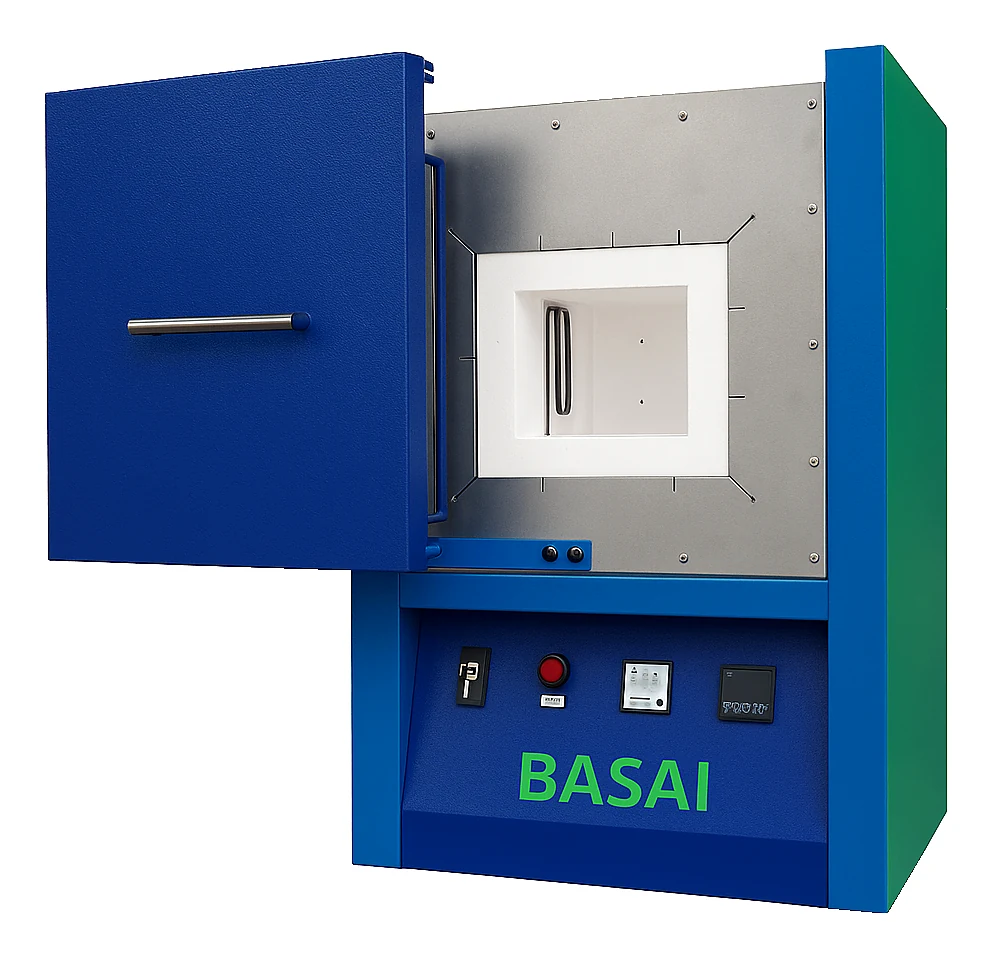
Basai specialises in manufacturing a wide range of standard and customised furnaces for industrial, laboratory and R&D applications. From 25 °C to 1,800 °C, with metallic, SiC, MoSi₂ and graphite heating elements and the best available vacuum, power and temperature control technologies, there is a solution to suit your application.
Innovative, reliable and unstoppable vacuum experts. Every furnace is built to your process, from compact lab units to production systems.
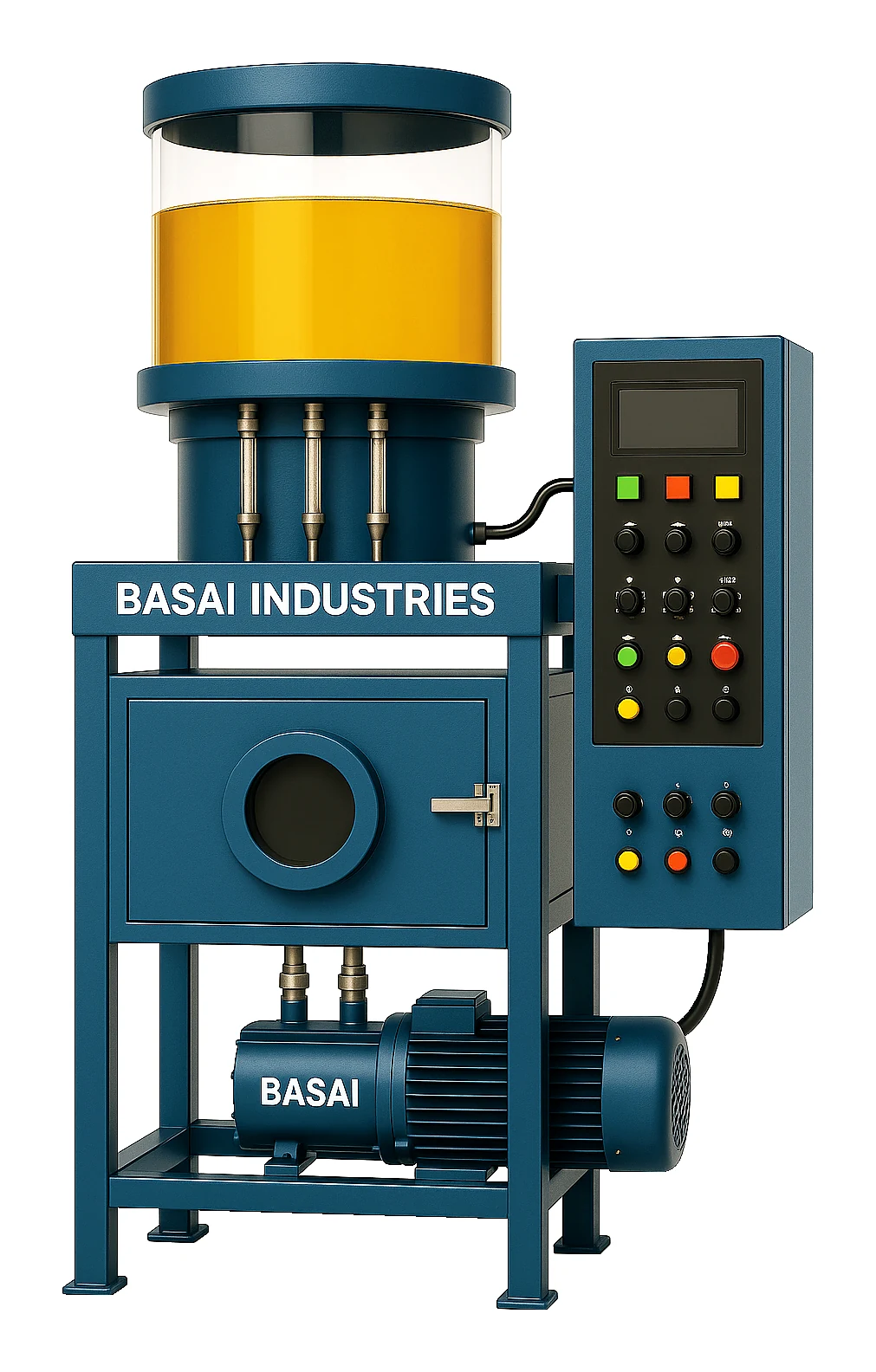
Oil Filling Ovens
Max. temperature
250 °C
Ultimate vacuum
5 × 10⁻³ mbar
Chamber volume
Customised
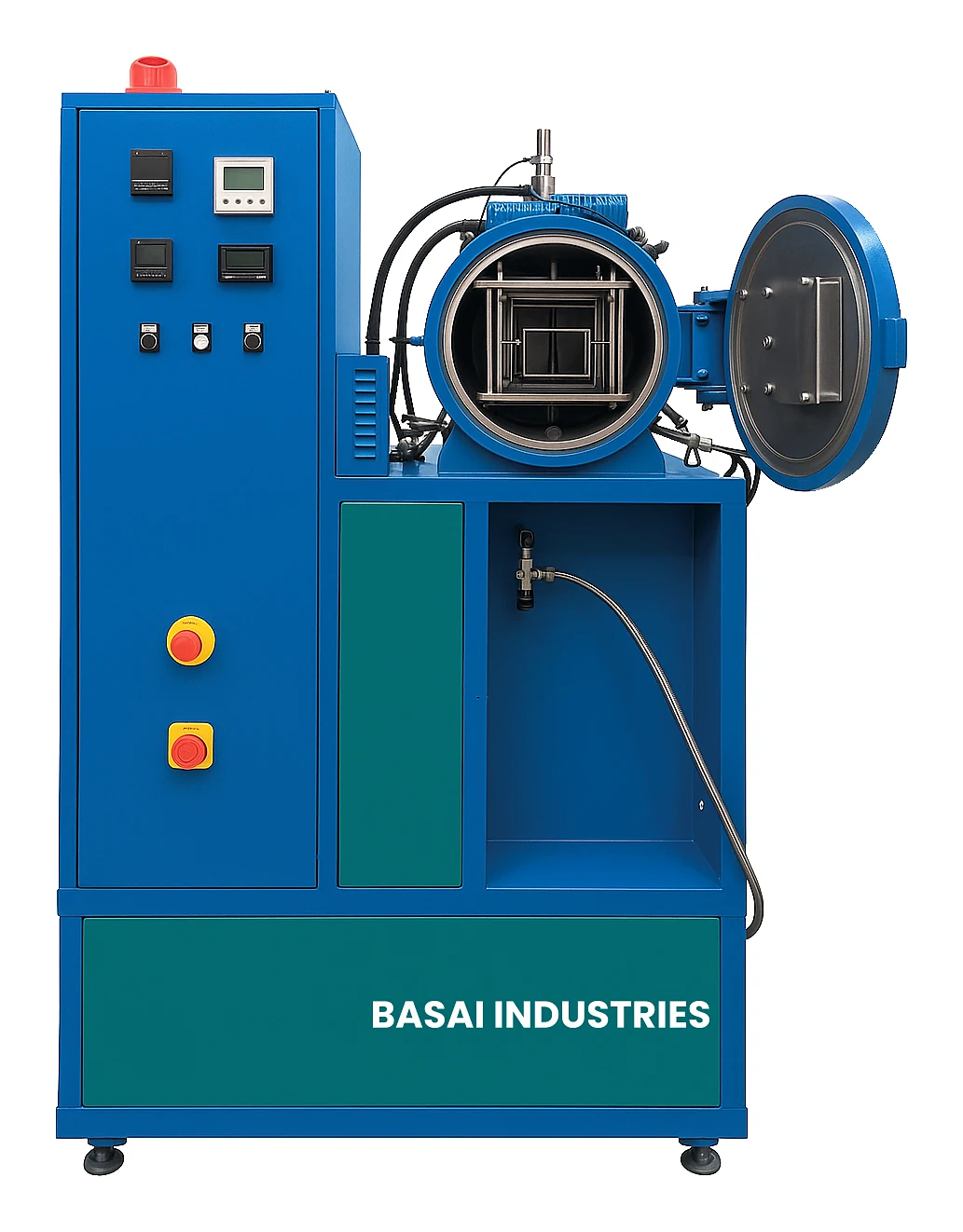
In the medical industry, an oil filling oven (sometimes called an oil-heated drying oven or thermal processing oven) is used for heat treatment, drying, sterilisation or curing, with oil as the heat-transfer medium instead of air or electric heaters.
Advantages
Uniform temperature distribution: oil as a medium reduces hot spots.
High temperature stability: ideal for processes that need tight temperature tolerances.
Energy efficient: better thermal transfer than air ovens.
Non-contaminating: closed-loop systems avoid exposure to fumes or particles.
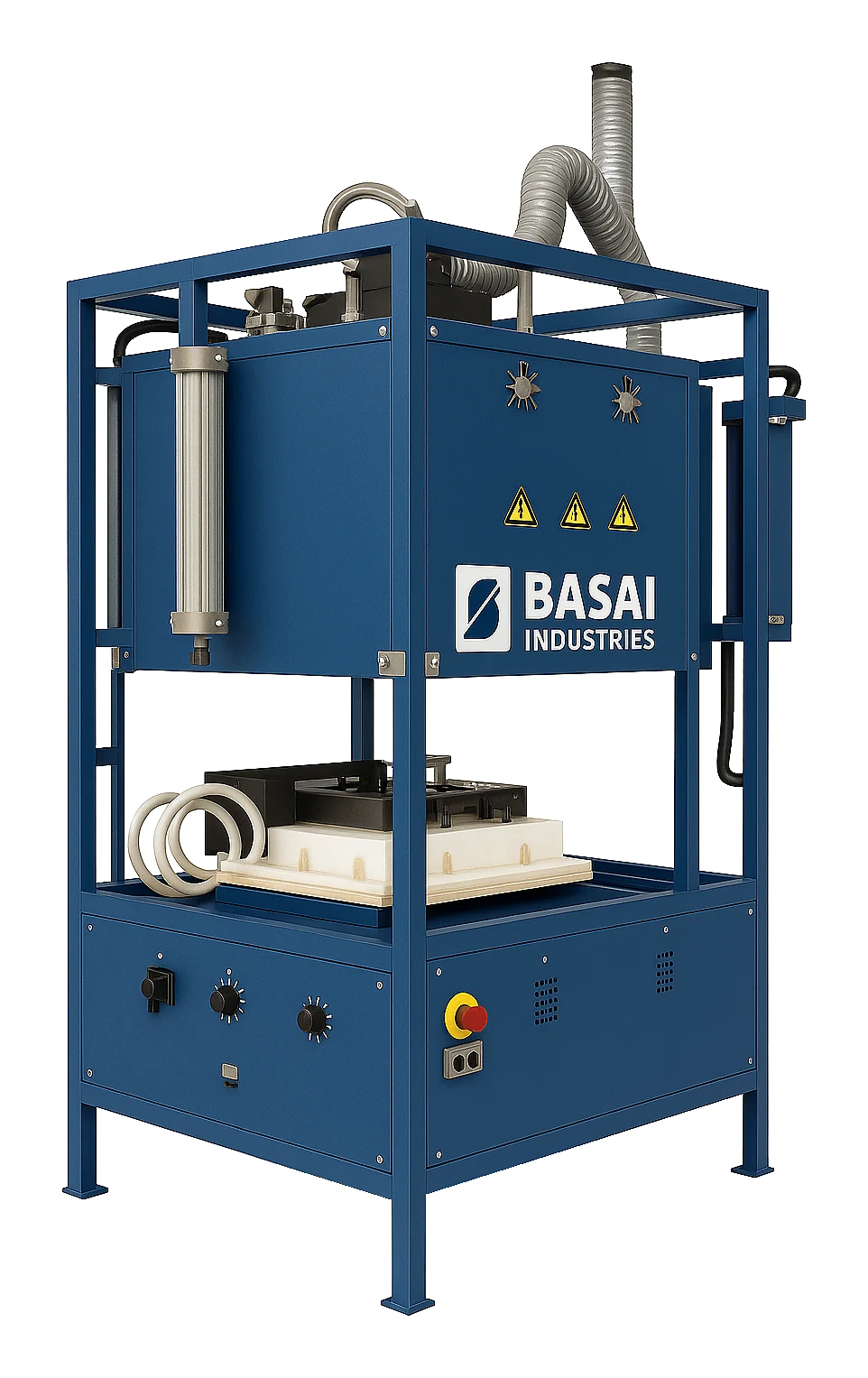
Top hat furnaces offer easy loading and unloading and tight sealing. The furnace chamber has pneumatic, hydraulic or manually actuated movement while the bottom hearth stays fixed. Heating elements are installed in all walls, giving excellent temperature uniformity.
Features
Maximum operating temperature: 1,100 / 1,200 / 1,300 / 1,500 / 1,600 / 1,700 / 1,800 °C.
Fast heat-up and cool-down rates.
Heating elements in Kanthal metallic alloys or Kanthal Super (MoSi₂).
Insulation with rigid ceramic fibre.
Temperature control with Eurotherm temperature controllers.
Power control through solid-state relays or thyristor units (phase-angle fired).
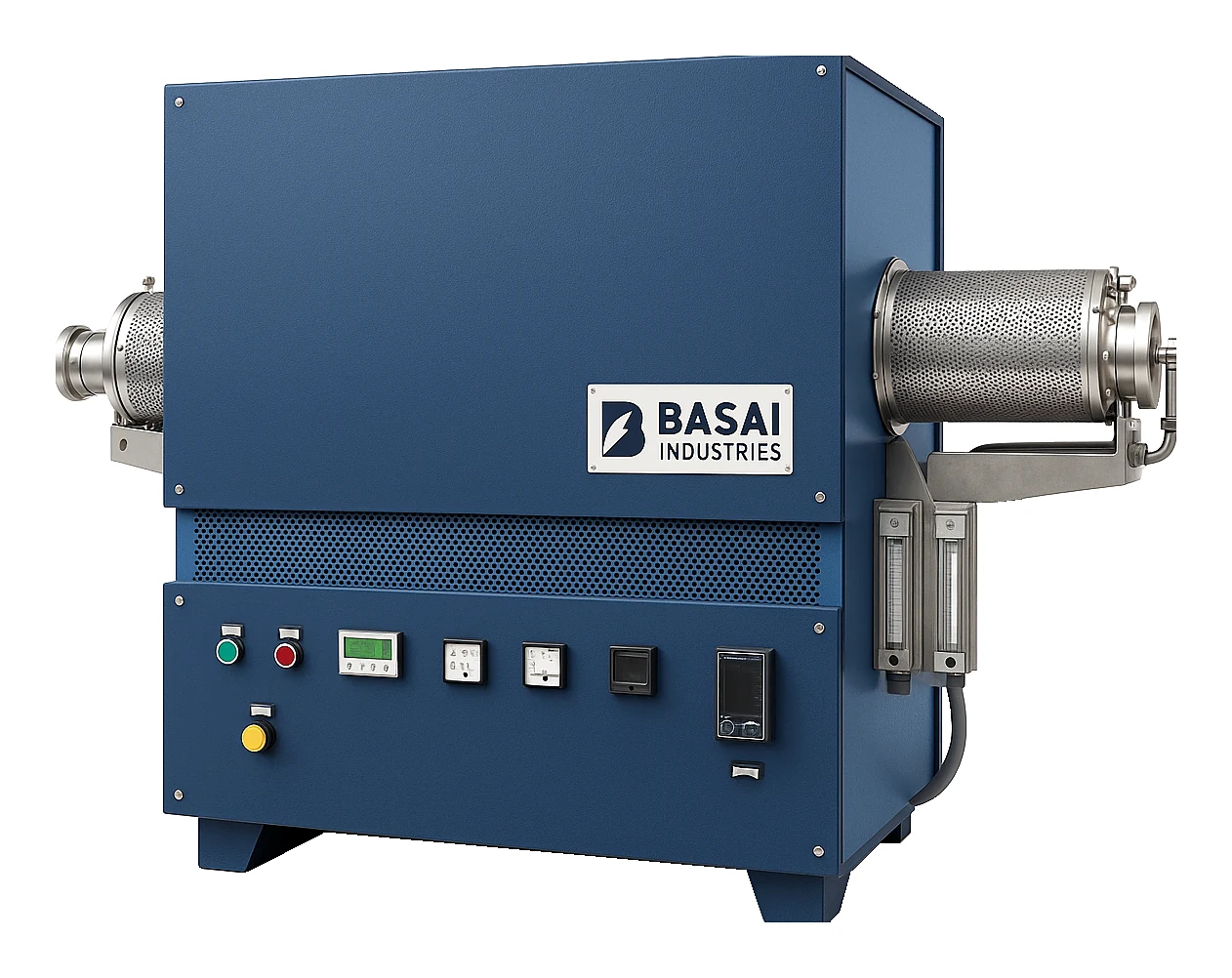
The Basai Compact Tube Furnace is an ideal solution for high-temperature applications, with a maximum temperature of 1,800 °C and a 40 mm tube diameter over a 450 mm heated length. A Eurotherm or equivalent controller gives precise temperature control for material testing, sintering and research.
Its compact design suits labs with limited space, with excellent performance and reliability.
Main features
Maximum operating temperature: 1,200 / 1,300 / 1,500 / 1,600 / 1,700 / 1,800 °C.
Fast heat-up and cool-down rates.
Heating elements in Kanthal metallic alloys, Kanthal silicon carbide or Kanthal Super (MoSi₂).
Insulation with rigid ceramic fibre.
Temperature control with Eurotherm temperature controllers.
Power control through solid-state relays or thyristor units (phase-angle fired).
Data acquisition possible through Eurotherm iTools software.
Over-temperature protection.
Multi-zone temperature control possible.
Vacuum and/or gas control accessories.
Recrystallised alumina, mullite or quartz tubes with cooled flanges sealed by Viton O-rings, for work under vacuum or controlled atmosphere.
Insulation plugs and radiation shields to avoid heat loss and increase temperature uniformity.
Basai hydrogen furnaces, also known as our ATF Series (Advanced Technology Furnace), are designed for high-temperature processing of materials in wet or dry hydrogen, fully dissociated dry ammonia, inert gases or vacuum, and meet the highest safety standards in the industry. Full refractory-metal hot zones and radiation shields give a clean processing environment and the highest vacuum performance.
Rapid heating and cooling enable high throughput for economical processing of high-end products. All systems have side heating elements, with optional top and bottom trim heaters for excellent temperature uniformity throughout the hot zone.
The configuration is tailored to the application, vertical or horizontal, with front, top or bottom loading. The most common is a bell-jar style, where the material stays stationary while the chamber is raised for access. High vacuum, ultra-high vacuum, wet or dry hydrogen and rapid cooling options are easily accommodated.
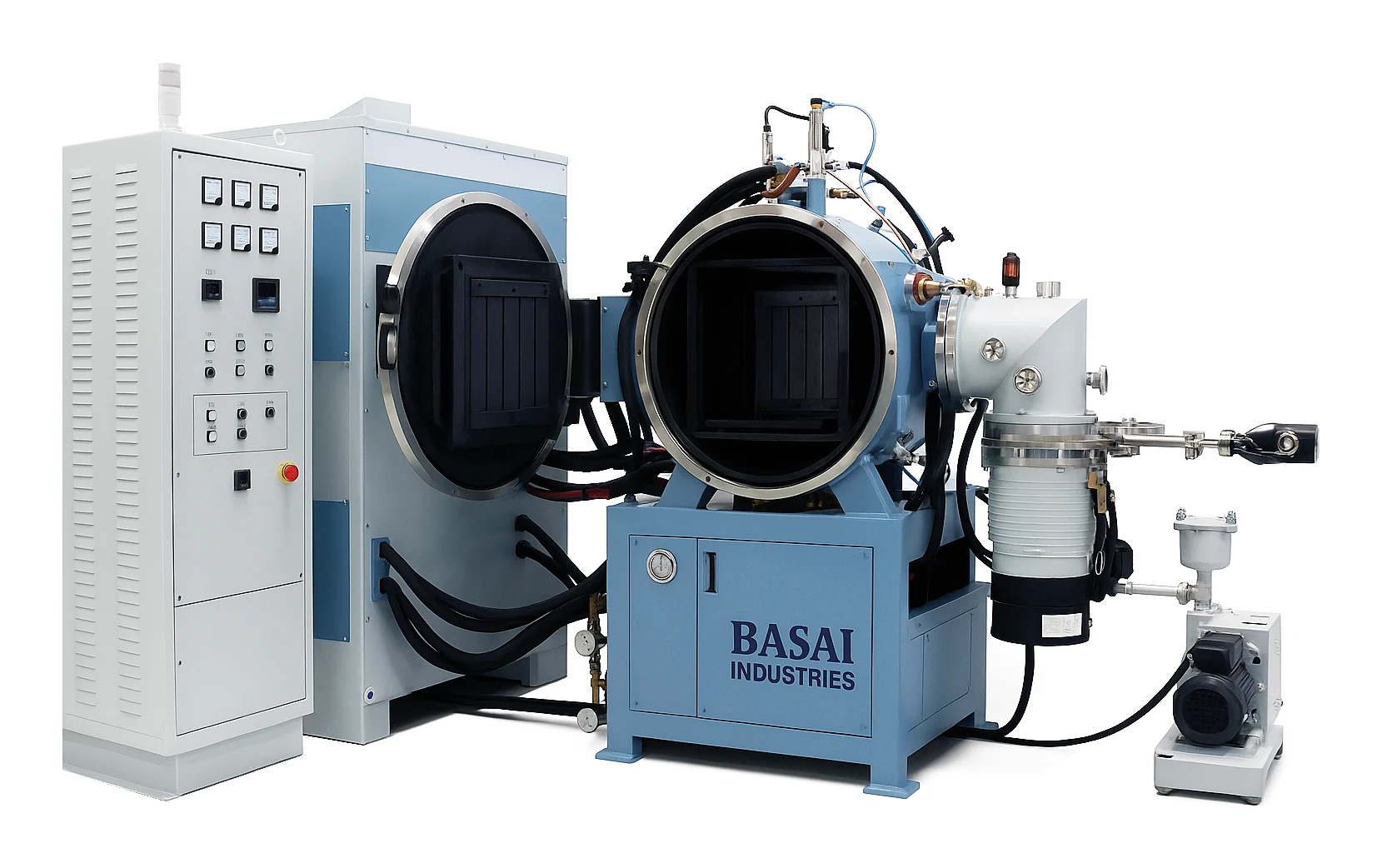
The Basai high vacuum furnace is a cold-wall furnace with a cylindrical water-cooled vessel and windows for visualisation. The hot zone (heating elements and shielding assembly) is made of refractory metals, tungsten and molybdenum.
Samples are introduced into the hot zone from the top or bottom by a manual or motorised lifting device. Vacuum is achieved by a rotary pump and a diffusion or turbomolecular pump.
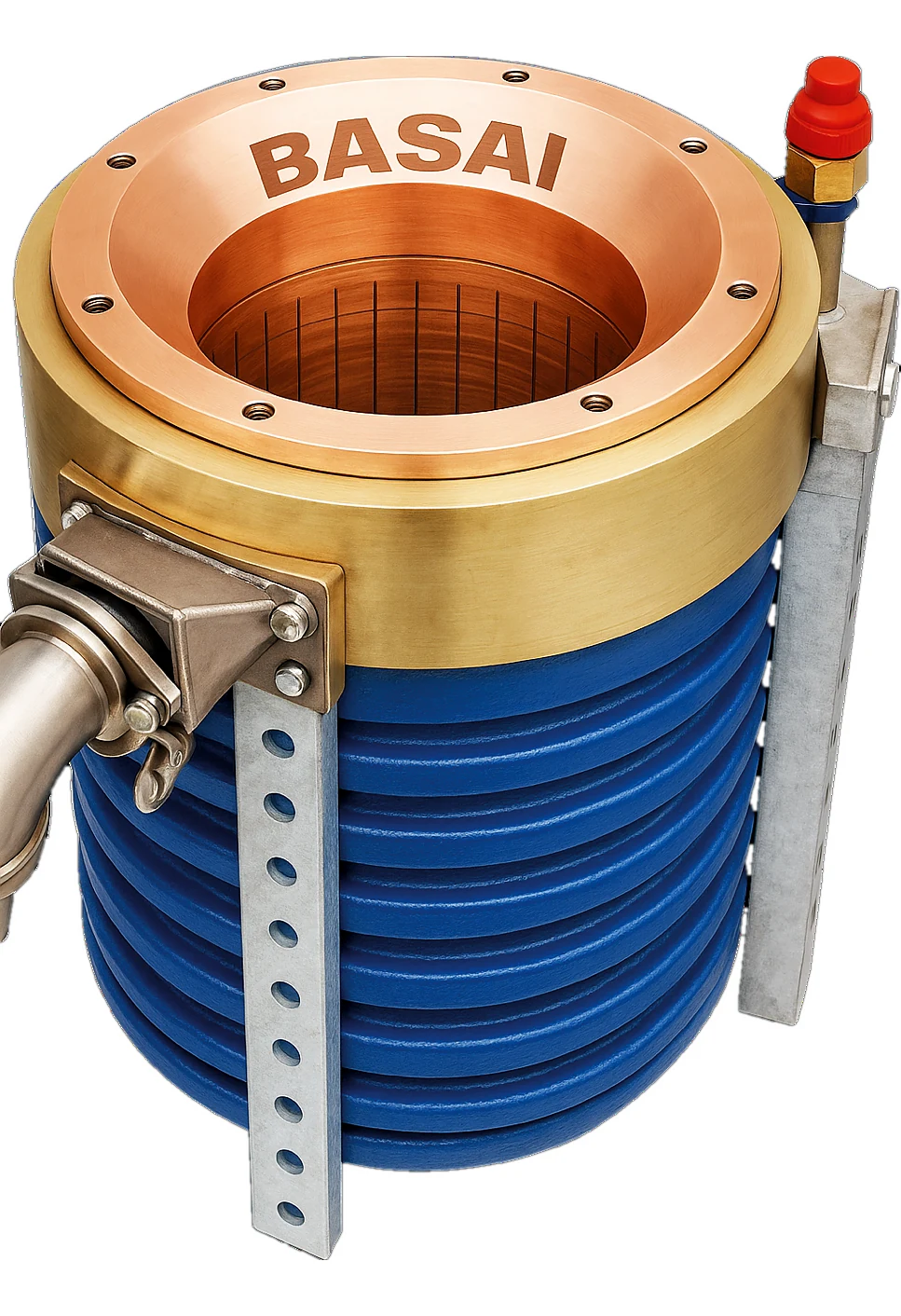
Basai induction furnaces easily handle a wide range of materials, used in everything from automotive and consumer products to critical directionally solidified or single-crystal aerospace parts.
Specifications
Maximum temperature: 2,500 °C.
Ultimate vacuum: 1 × 10⁻⁶ mbar.
Chamber size: as per customer request.
Temperature monitoring by pyrometer or thermocouple.
Induction power supply from CEIA, Italy or TRUMPF, Germany.